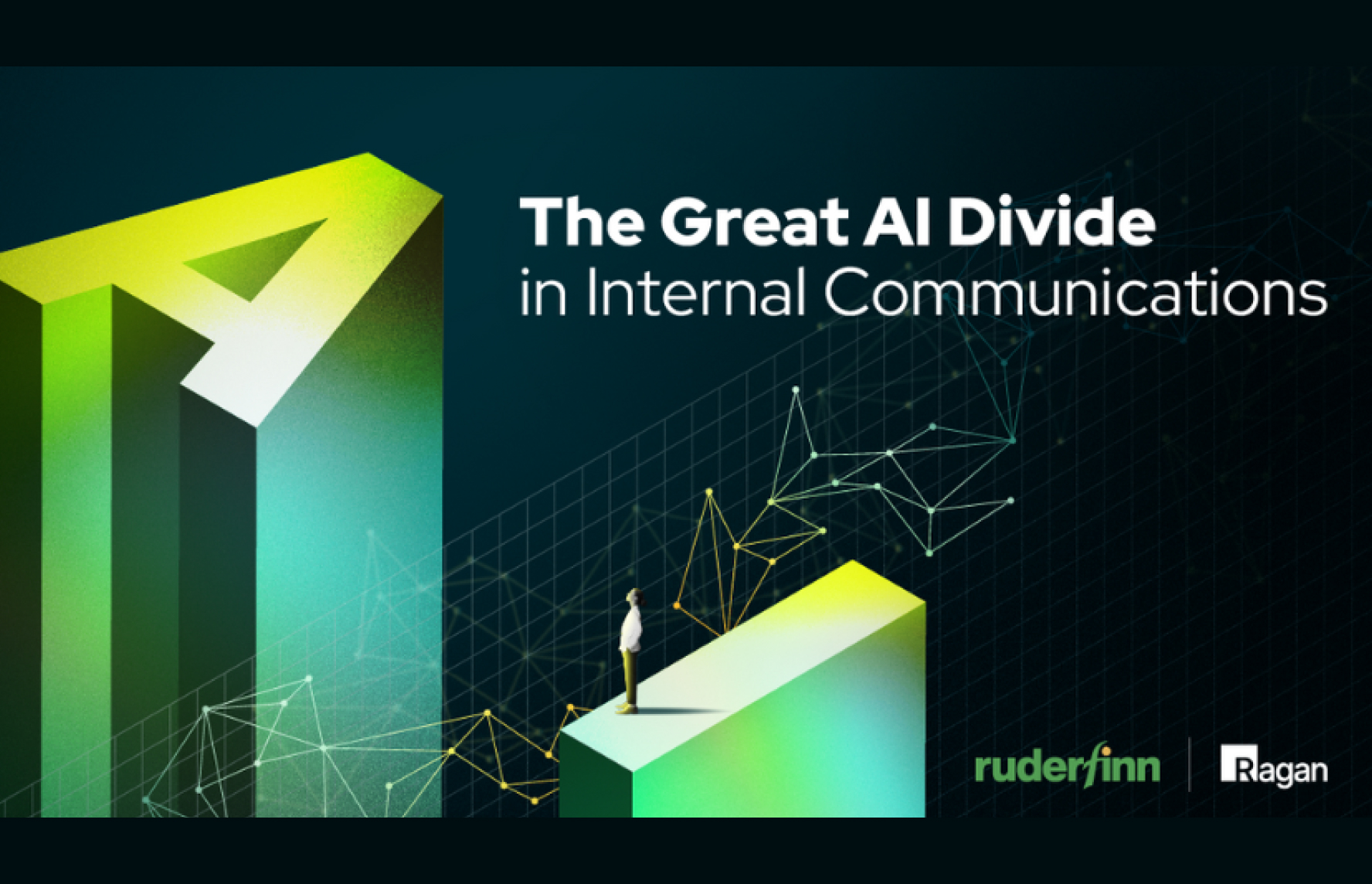
NEW YORK – 9/24/2024 – Ruder Finn and Ragan have published a report, “The Great AI Divide in Internal Communications,” which reveals that industry, company size and roles each affect AI adoption, usage and outlook in internal communications. The findings explore how communications practitioners are harnessing AI to advance their internal communications work today and in the near future.
Key findings included:
- AI adoption varies across sectors with tech-forward industries leading and regulated industries using it the least – Internal communicators from technology industries like aerospace, aviation, transportation, manufacturing and technology use AI the most, followed by government and non-profit, and then highly-regulated industries like healthcare, pharma and biotech, and finance, banking and insurance using it the least.
- Larger companies are AI-reluctant compared to smaller organizations – The larger the company, the less likely they are to use AI. Mid-sized companies appear to be the most optimistic about AI use.
- AI drives internal communications priorities with room to broaden its uptake – AI is generally being used for internal communications priorities, but there is room to maximize AI to accomplish priorities, especially in messaging and employee engagement. 57% identified executive messaging and positioning as a top priority, but 34% are using AI for that purpose.
- The C-suite are more enthusiastic than the wider workforce – C-suite communicators are more likely to use, and are more optimistic about, AI than broader internal communicators, who want more training. 83% of those in the C-suite use AI at least daily compared to 41% of senior leaders and mid-level communicators.
- Age creates an AI adoption divide – Younger communicators have a higher overall AI adoption rate than older communicators. Within the C-suite, executives 43 and under use AI at least once daily.